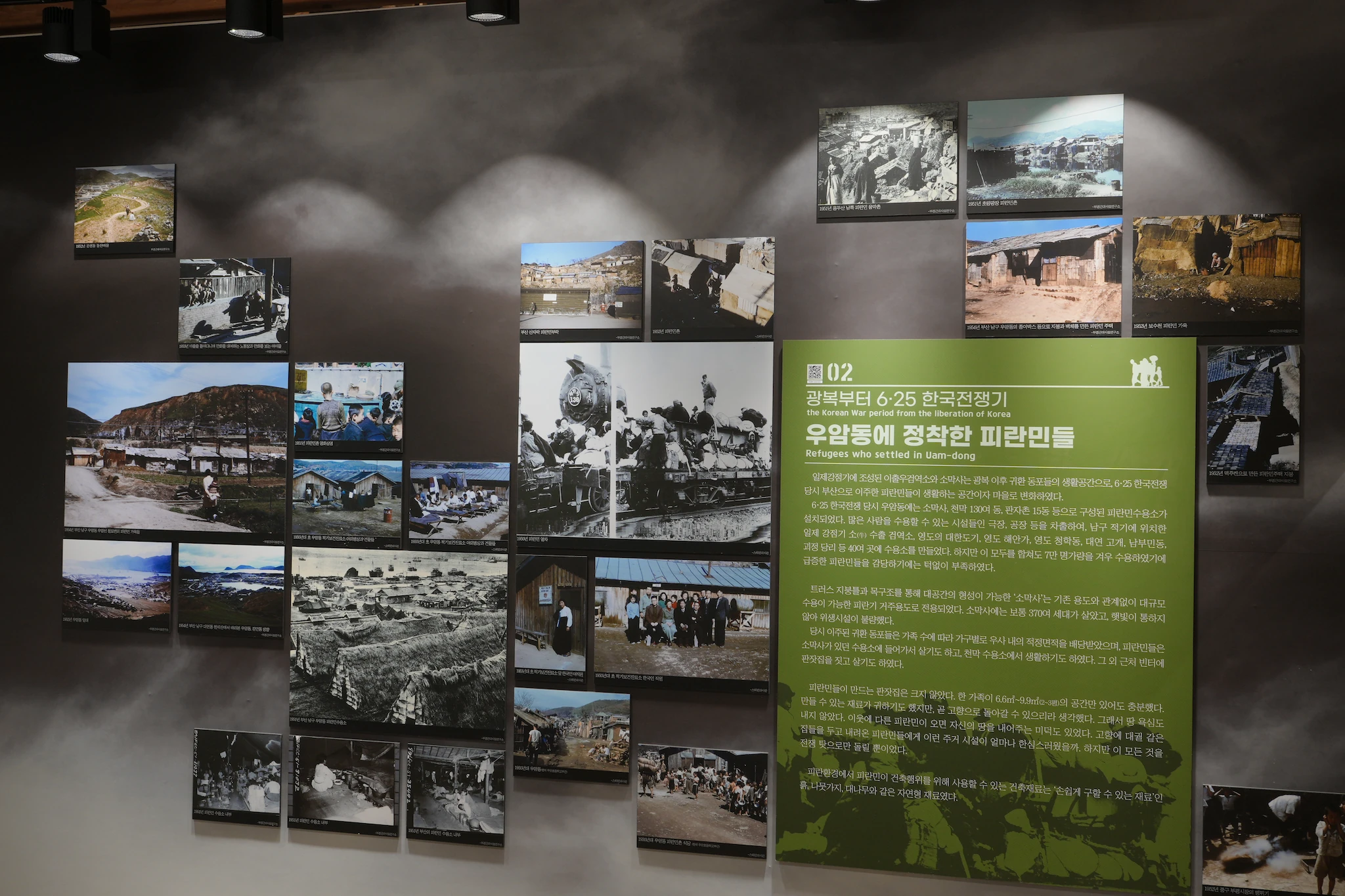
Somak Village began as a cattle quarantine area during the Japanese colonial period. After Korea’s liberation, the former cattle sheds became homes for returnees and, during the Korean War, for refugees who had fled to Busan. Later, workers settled here during Korea’s rapid industrialization, leaving the village with layers of modern history.
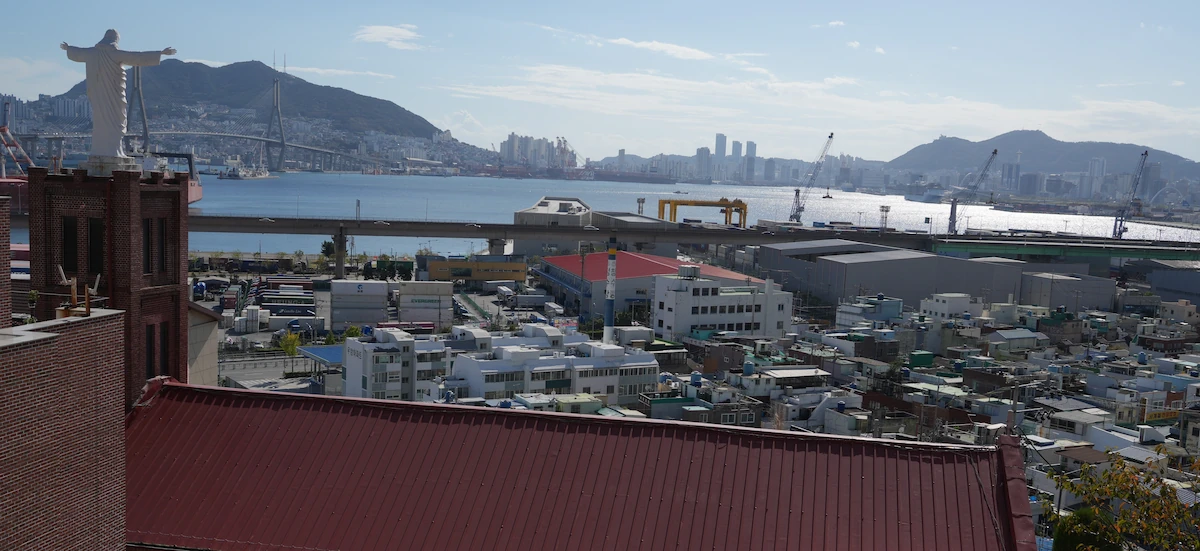
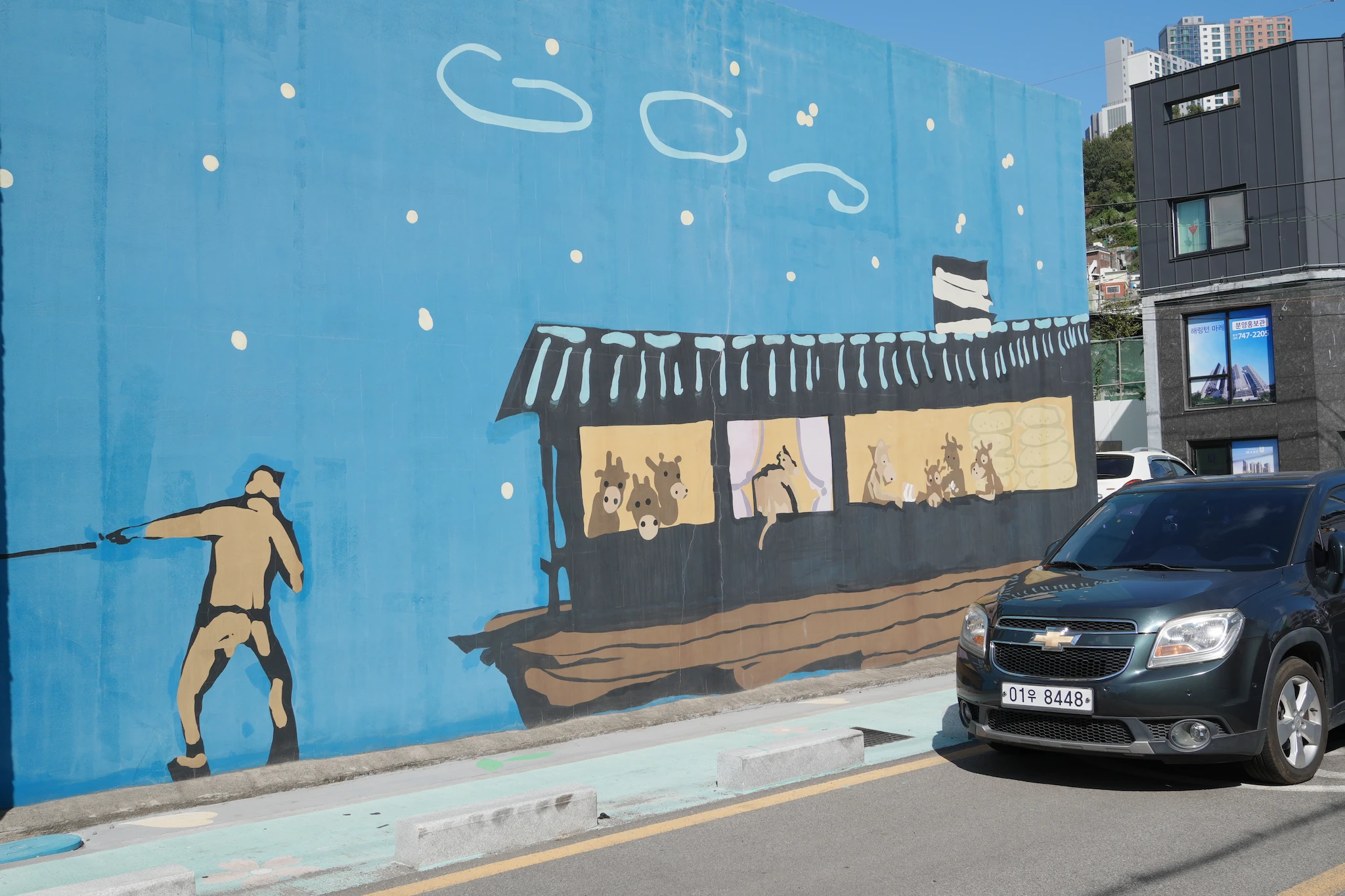
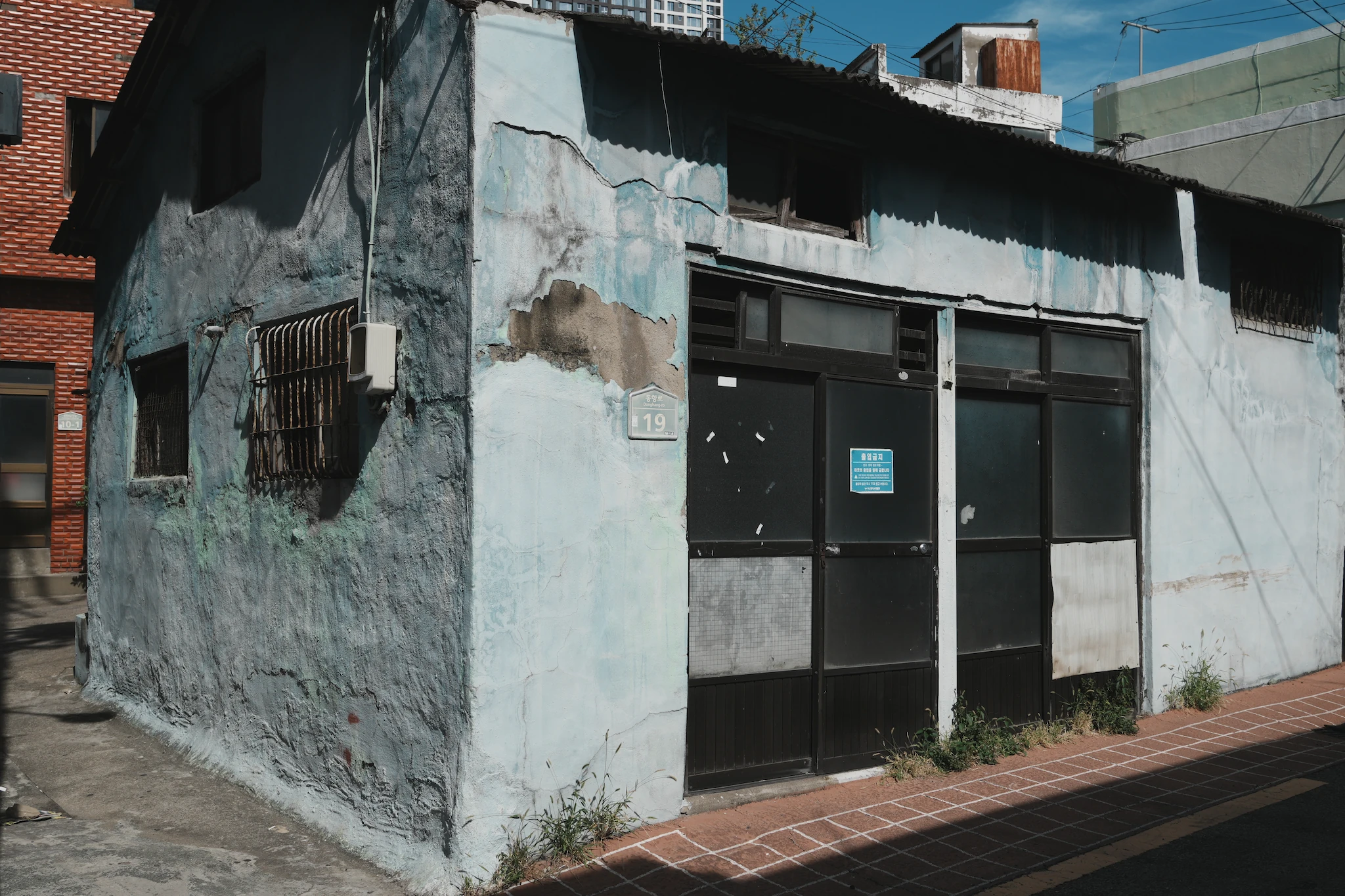
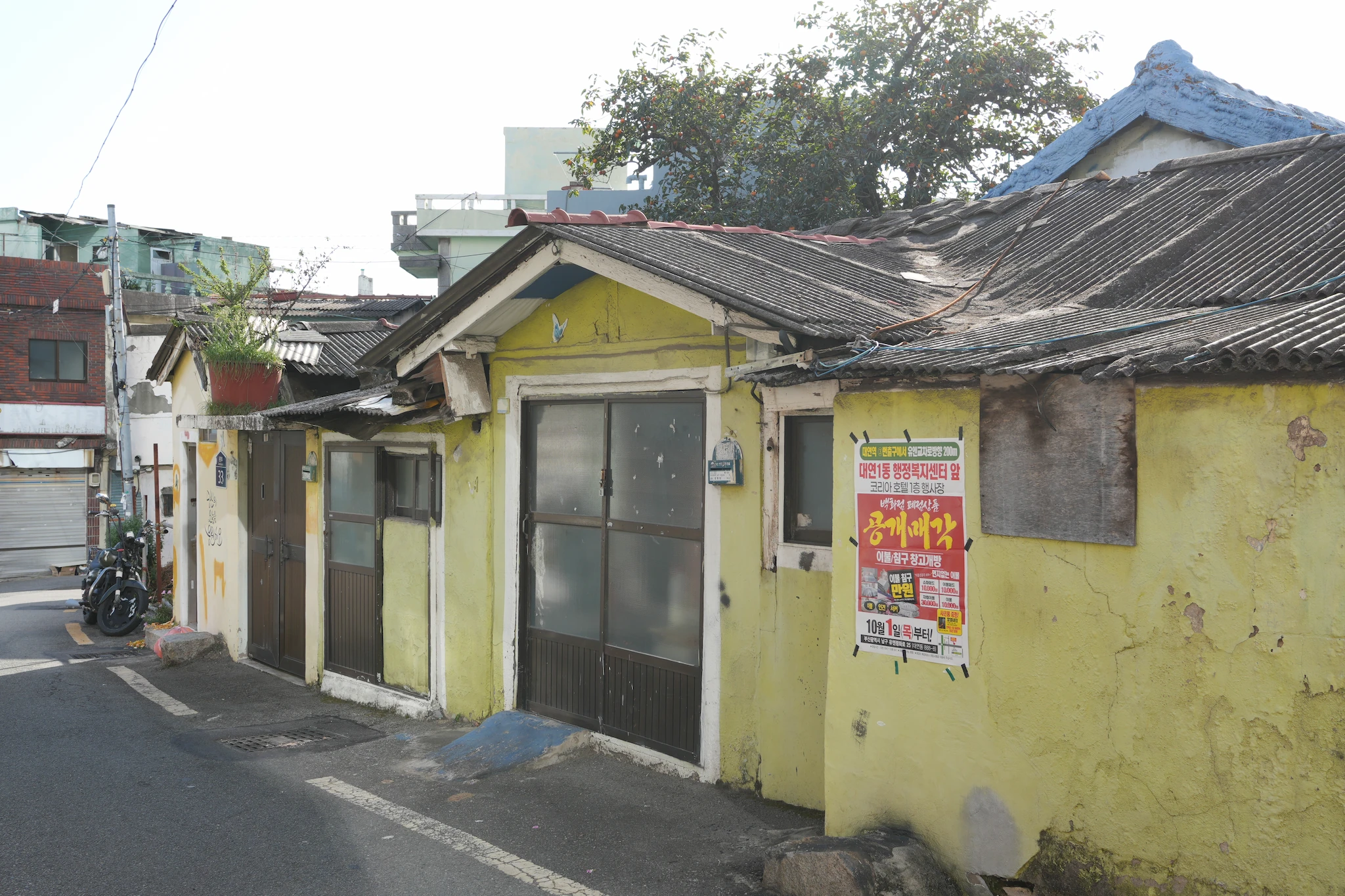
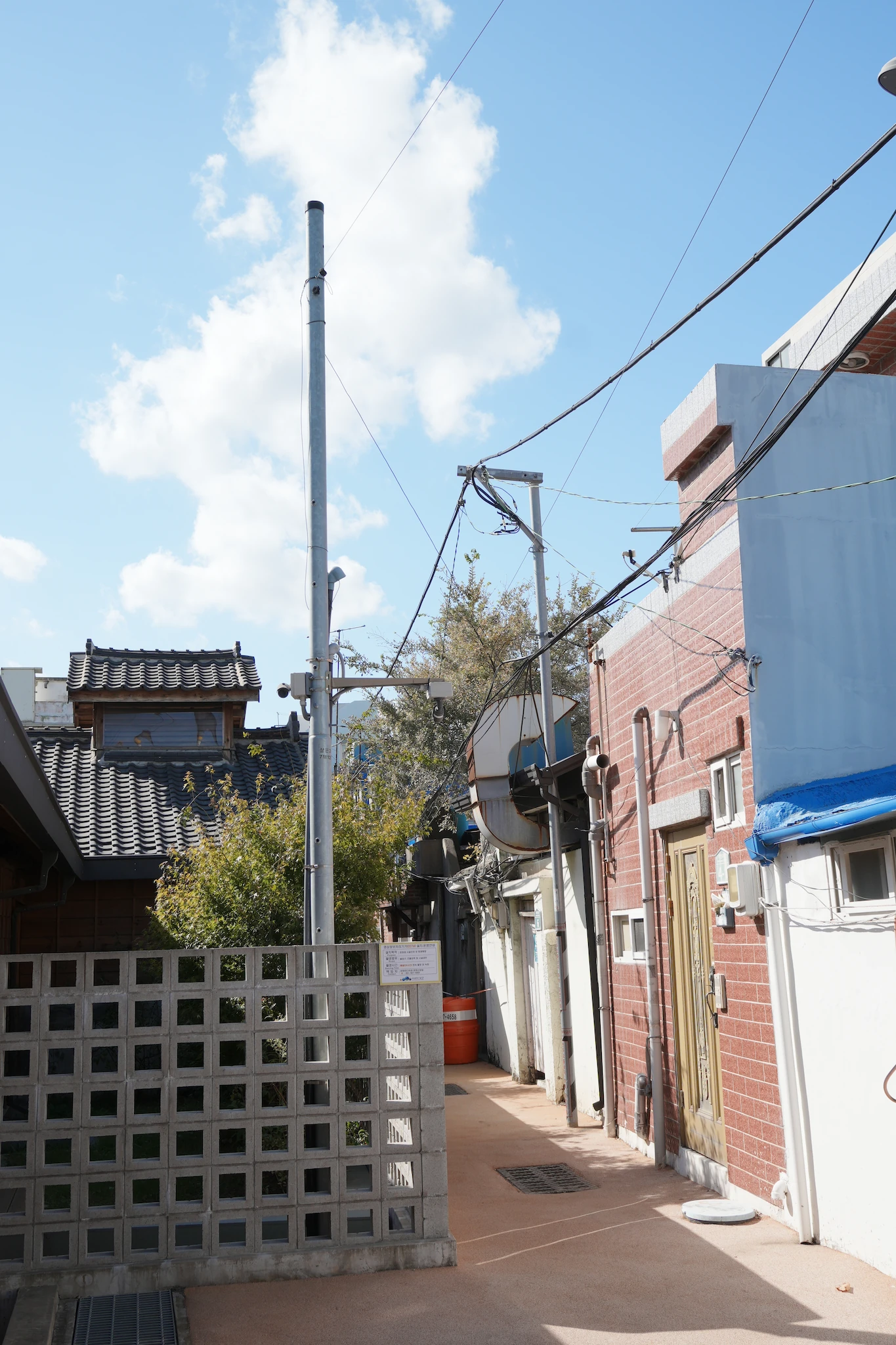
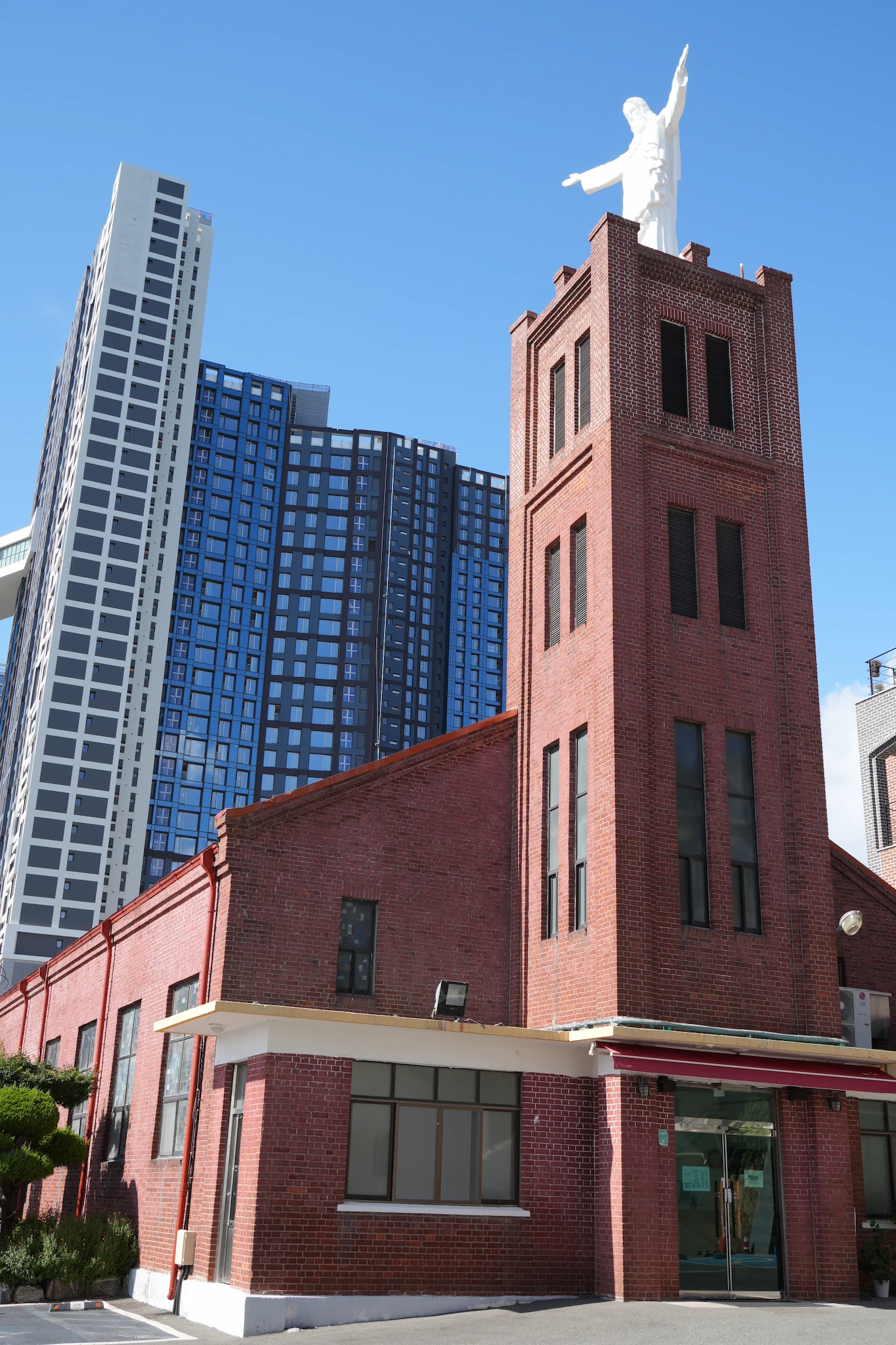
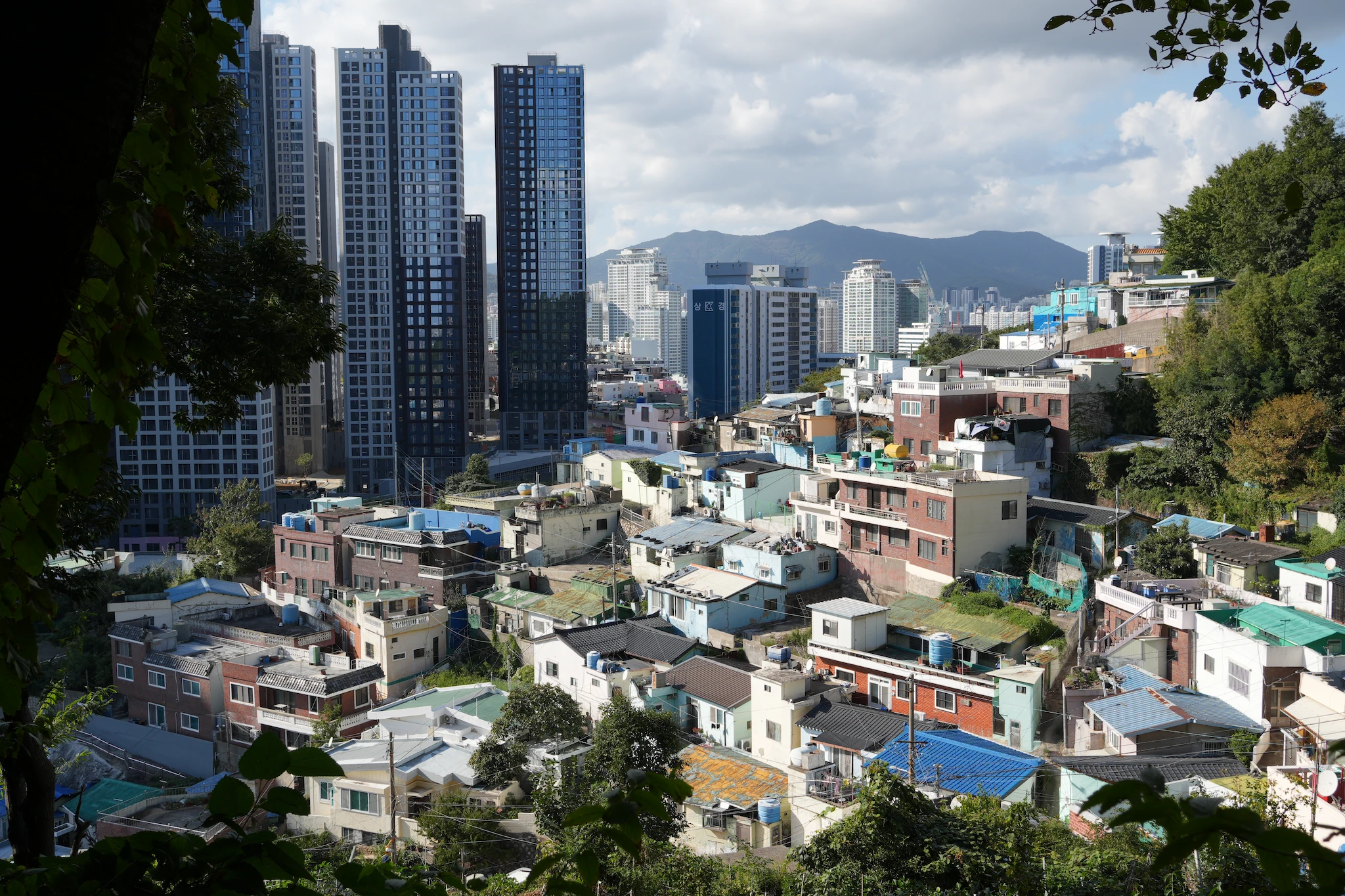
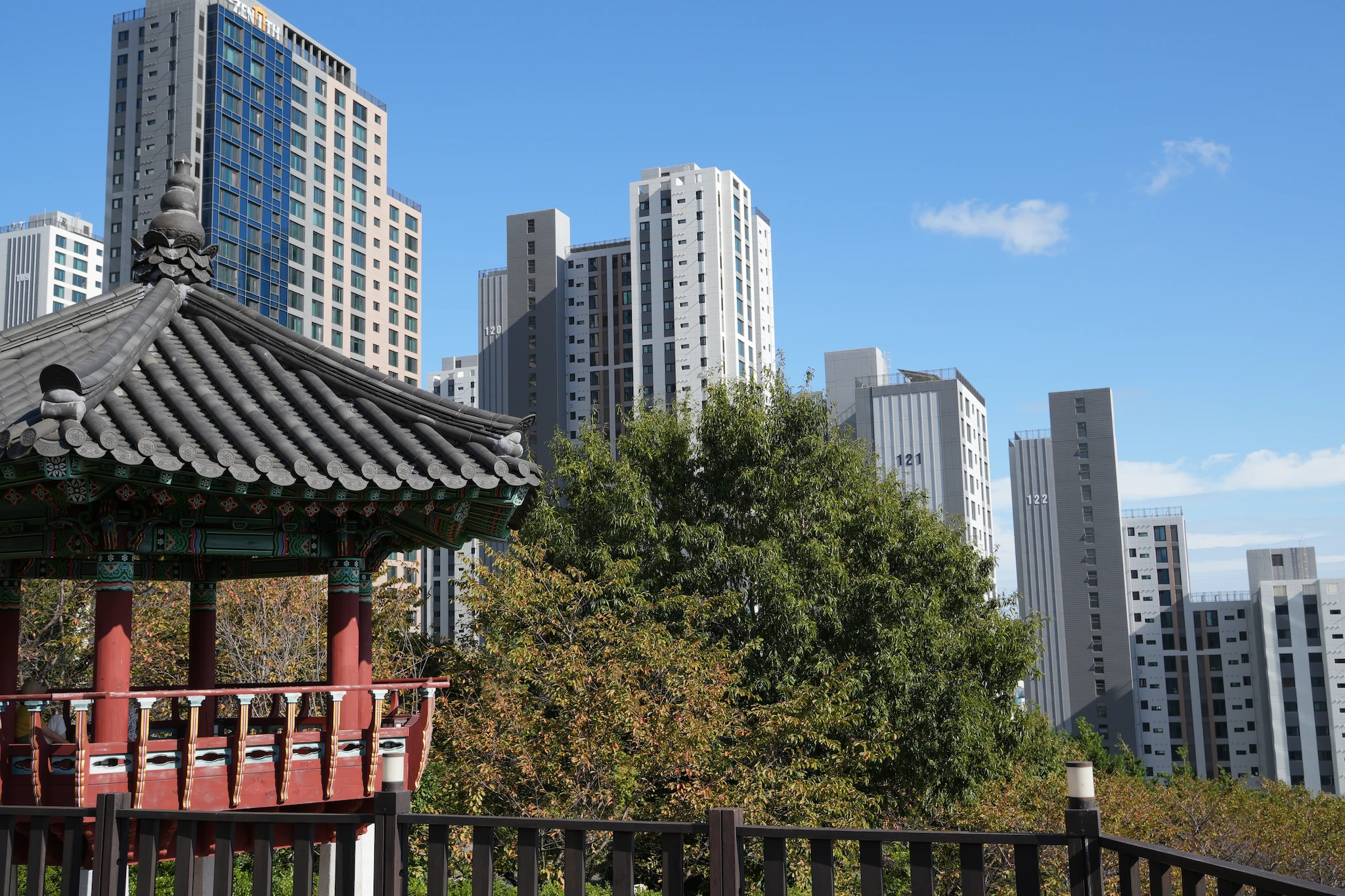
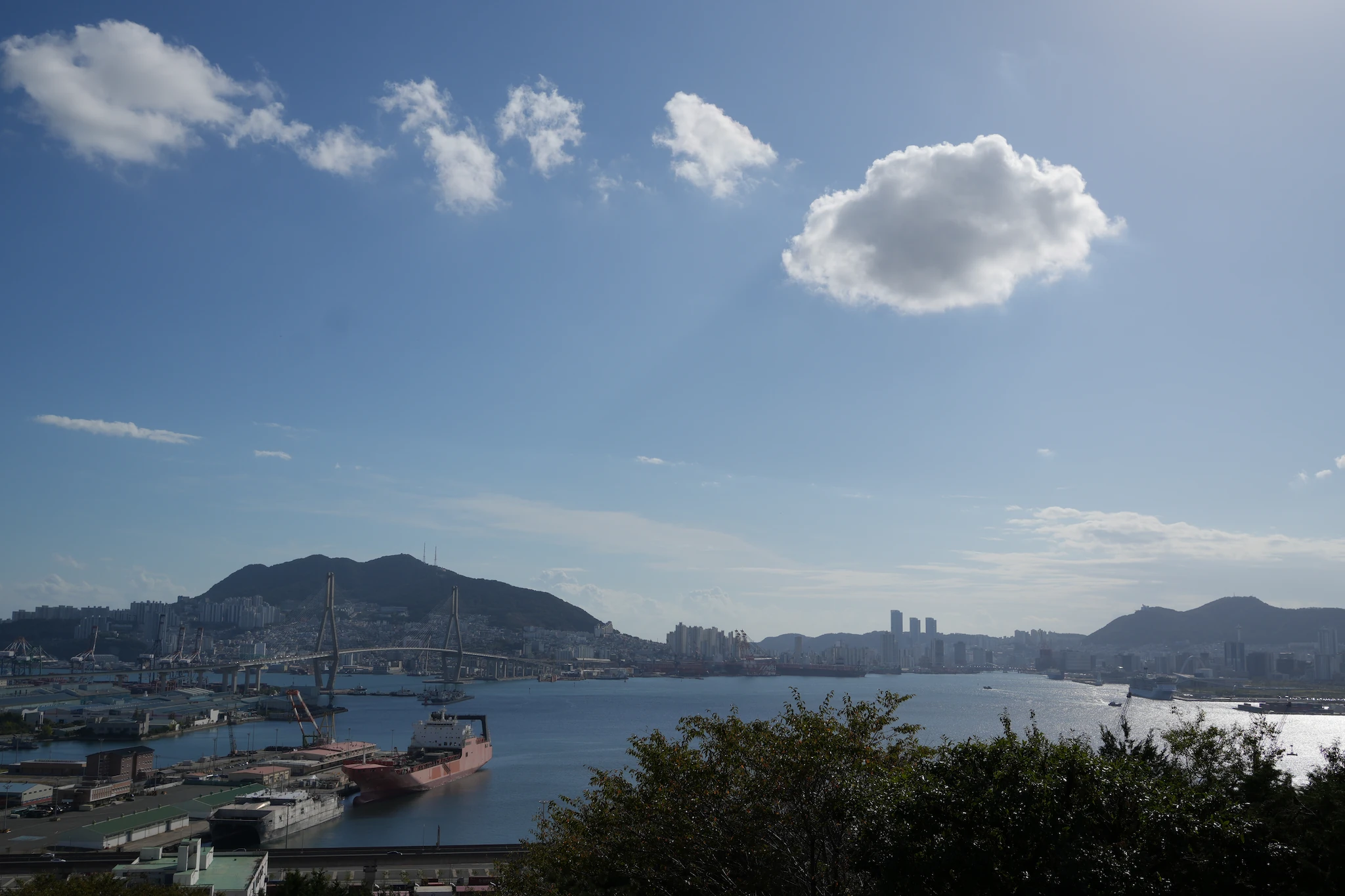
At the entrance to the village, a softly painted mural hints at the stories of the past, quietly setting the tone for what lies beyond.Homes that still bear traces of the old cattle sheds are scattered throughout the village, filling the streets with a quiet, nostalgic atmosphere.A small memorial hall in the village offered a glimpse into its past, giving me a quiet moment to reflect on the history held within these streets.Donghang Cathedral once offered comfort to refugees who had made this hillside their home. Even today, it stands quietly above the village, watching over the people below.On the way up to Uam-dong Urban Forest, densely packed homes clung to the hillside, while new apartment buildings were rising nearby. Together, they formed a striking view of a city constantly changing.At the top of Uam-dong Urban Forest, a traditional Korean-style pavilion offered a quiet place to rest and take in the view.From the top of Uam-dong Urban Forest, the sea stretched out before me, glowing softly in the warm light of autumn.